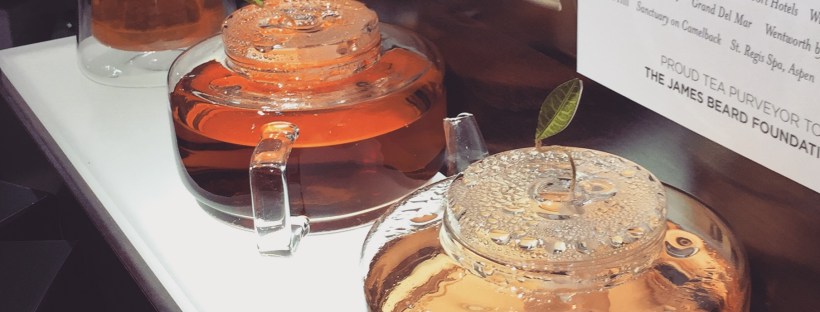
Some like it hot.
There’s a lot of hype around tea health so let’s debunk some myths and set the record straight, shall we. But first, fundamentals!
1 Tea Plant = Camellia sinensis
2 Species = Camellia sinensis var. sinensis for Chinese teas and Camellia sinensis var. assamica for Indian Assam teas
6 Categories of Tea = black, dark (including puer), oolong, yellow (super rare), green and white
And here’s the kicker; all tea comes from the same plant, the Camellia sinensis plant. The differences are a result of growing conditions, processing and geography.
So, let’s bottom line some hard and fast facts:
- No need to choke down earthy green tea if you prefer white or black. Because all tea comes from the same plant it’s all incredibly healthy. Drink what you like! The best health benefit from tea is drinking oodles of your favorite, so if Matcha is your jam, enjoy…and if you are deep into Assam’s, have at it.
- Ever notice that coffee makes you jittery? Yep, it’s because it’s absorbed by your nervous system as opposed to tea, which is absorbed by your muscular system (due to water solubility rates from the chemicals in tea). A few other caffeine related notes; teas that are baked have lower caffeine and if you taste toastiness (as opposed to bitterness) they have less caffeine. Also, the category of tea does NOT determine the caffeine in your cup. The two factors that do influence caffeine levels are the temperature of the water and the steep time. So, you can steep and throw if you are wanting less caffeine from those beautiful black and oolong teas.
- Technically, Matcha has the richest health benefits because you are ingesting the entire leaf. So, if you love your morning whisking, know that you are off to a healthy start.
- Do you add milk to your tea? It’s possible that you are reducing the health benefits. But, by adding lemon you will counteract that (milk binds so chemicals don’t get absorbed)!
- Ever worry about the impact of pollution on tea crops? Don’t! Because you need water and elevation to grow the camellia sinensis plant, tea farms are in mountainous regions away from factories and common pollutants.
- And finally, if you really, really want to hone in on one category of tea for health benefits; enjoy some black tea; it can help lower blood pressure. Tea is preventative, not curative.
Steep, try new blends and enjoy all the tea you can drink (you really need to top out at about 20 cups per day to overdose on caffeine!). It’s good for your mind, body and spirit! La-tea-da.
 thirdsteep.com